 Fast Digital Product
How to Build a One-Person Business in One Afternoon (Even If You're Starting From Zero)
What if you could start your morning with no business idea and end the afternoon with a digital product, a sales page, and a simple system for attracting customers?
In this guide, I'll show you how I'd build a one-person business in just one afternoon, starting from scratch.
We'll focus on selling digital products, specifically PDFs, and I'll introduce you to a tool that can help simplify the entire process.
I'll also show you how to attract potential customers without relying on paid advertising.
Let's get into it.
1. Choose a Simple Business Model
First, let's decide what we're selling.
I'm not going to complicate things with a massive online course, a membership, or a bundle containing 50 different templates.
We're selling PDFs.
That's the business model.
Think about all the useful information you've learned, skills you've developed, or problems you know how to solve.
Now imagine turning that knowledge into a practical guide that someone would happily pay $9.99 to access.
For example:
- A beginner's guide to budgeting on a low income.
- A 30-day meal plan for busy professionals.
- A guide to starting a small cleaning business.
- A beginner's guide to growing on Pinterest.
- A practical guide to finding remote jobs.
The possibilities are endless.
But there's one important thing to understand.
Just because you can create a PDF doesn't mean people will buy it.
Your product needs to solve a problem people actually care about.
This is where many beginners get things wrong.
They spend days creating beautiful PDFs, designing covers, and setting up stores without checking whether anyone wants what they're selling.
Then they launch and wonder why nobody is buying.
If we're building a business in one afternoon, we don't have time to waste creating products based on guesses.
We need to start with demand.
2. Research Your Product Idea Before Making It
Before creating your PDF, you need to understand three things:
- Who are you creating the product for?
- What problem are they trying to solve?
- What would they be willing to pay for a solution?
You can start by researching conversations on Reddit, browsing relevant Facebook groups, checking Pinterest search suggestions, and looking at existing products in your niche.
Pay attention to the questions people repeatedly ask.
Those questions can become product ideas.
For example, instead of creating a generic budgeting PDF, you could create a budgeting guide specifically for young professionals who struggle to save money while managing everyday expenses.
That's a much clearer offer.
If you want to speed up this process, you can use FastDigitalProduct.com.
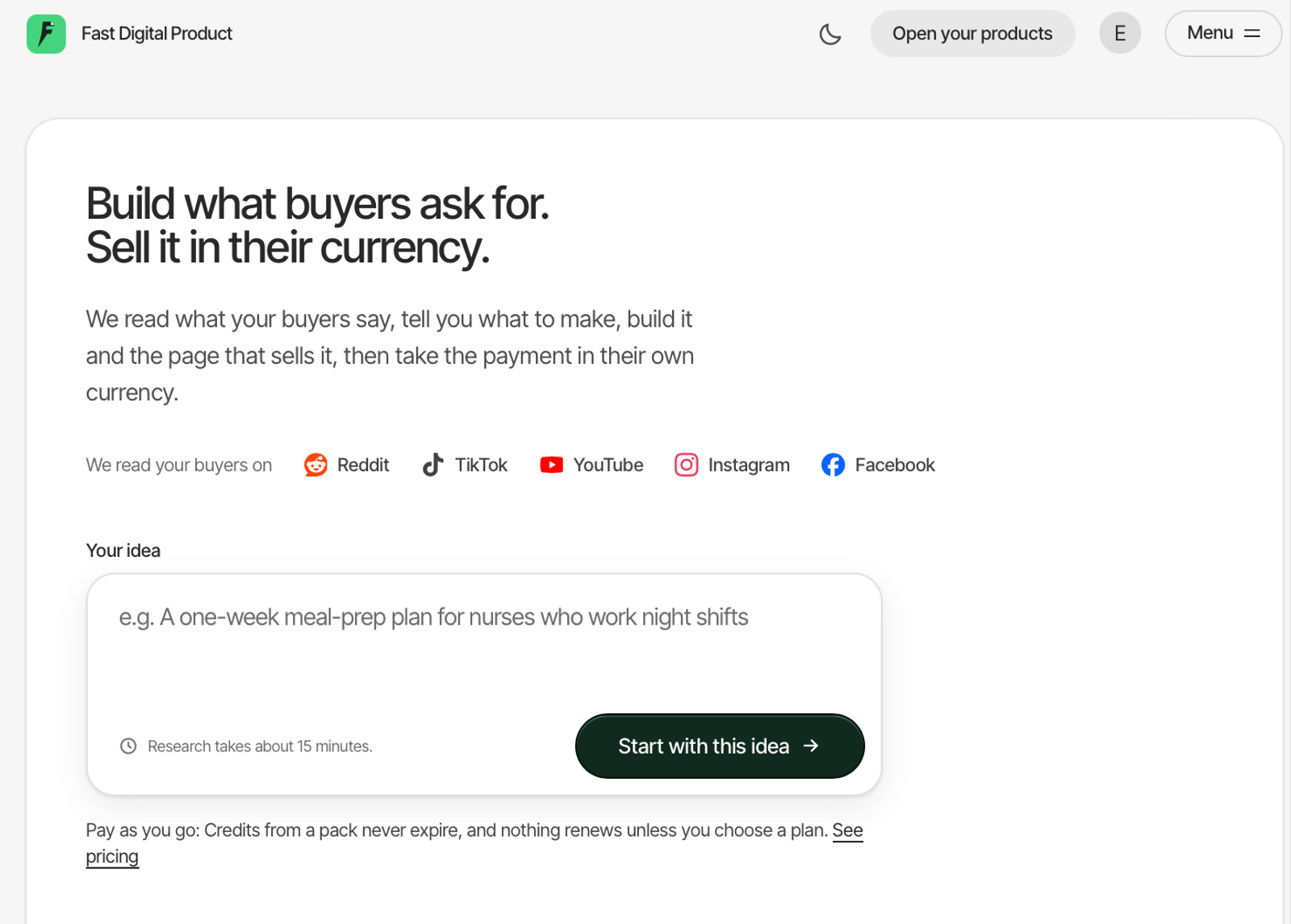
Its purpose is to simplify several parts of the digital product making process.
You provide your product idea, and the tool helps with researching the idea, developing the offer, building the sales page, and generating the PDF.
Essentially, it brings several steps of the product-building process together.
This is particularly useful when you're starting out and don't want to spend hours figuring out which tools to use.
Of course, AI-generated research and content still need your review. You should verify the information, improve the product, and make sure it genuinely delivers on its promise.
The goal isn't to publish something just because a tool generated it.
The goal is to create something people actually find useful.
3. Create Your PDF and Set Up Your Sales Page
Now that you have a product idea, it's time to turn it into something people can buy.
Remember, we're keeping this simple.
You don't need a 100-page ebook.
A useful 15-page guide that solves one specific problem can be more valuable than a 100-page document filled with unnecessary information.
Your PDF should include:
- A clear explanation of the problem.
- Practical steps someone can follow.
- Examples that make the information easier to understand.
- Useful resources or tools where necessary.
- A clear next step for the reader.
Fastdigitalproduct.com helps with this part of the process.
- Makes your digital product
- Builds you a sales page
- Allows you to host and receive payments
You can use a digital product platform to host your PDF, display your sales page, and collect payments.
Some tools, including FastDigitalProduct, aim to combine these functions so you don't have to piece together multiple services.
At this point, you have the foundation of your one-person business:
A product, an offer, and a way to collect payments. But we're not done.
Because having a product online doesn't automatically mean people will find it.
4. Build a Marketing System That Doesn't Depend on Ads
Every digital product business needs two important systems:
- A sales system.
- A marketing system.
Your sales system helps people purchase your product.
Your marketing system helps people discover it in the first place.
And if you're starting with little or no money, you need a way to attract potential customers without constantly paying for advertisements.
One platform I'd consider is Threads.
I've recently started posting on Threads again, and even with a relatively small following, I've been getting views on my content.
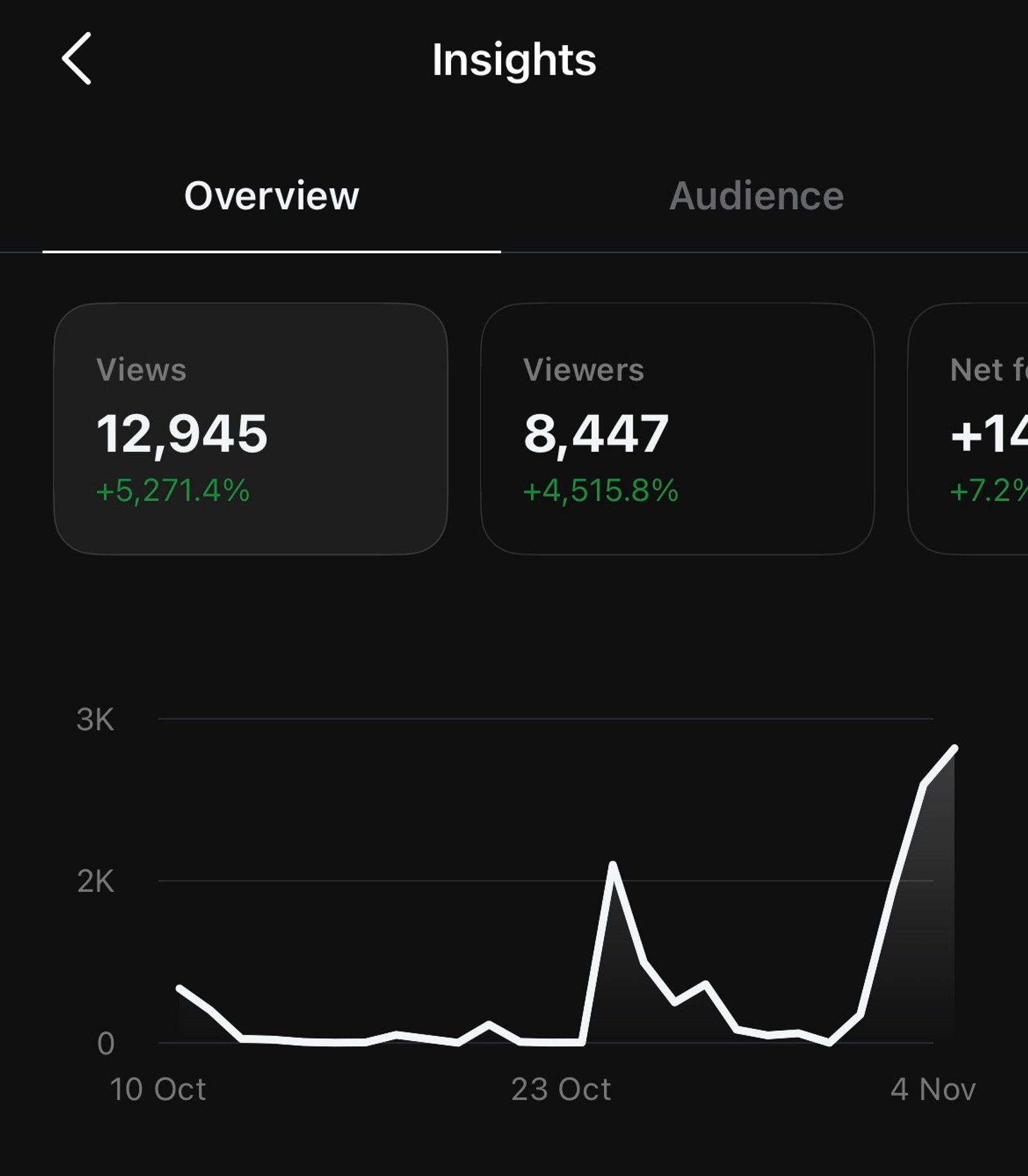
That's interesting because it shows you don't necessarily need thousands of followers before people can discover your posts.
However, there's something important to remember:
Views don't automatically translate into sales.
Someone can read your post, find it interesting, and keep scrolling without ever visiting your product page.
That's why I wouldn't rely on Threads alone.
I'd combine it with an email marketing system.
Here's how the process would work:
- Create helpful and interesting posts around the problem your PDF solves.
- Publish around 5–7 posts per day, testing different topics, hooks, and formats.
- Direct interested readers to a free resource related to your paid product.
- Collect their email addresses through a landing page.
- Set up an automated email sequence that introduces your paid product and explains how it helps.
5. Give Your Business a Simple Daily Routine
You've made the product, published the sales page, and established a way to attract potential customers.
Now what?
You need a routine that keeps the business moving.
Here's what I'd focus on each day:
- Publish useful Threads posts that attract people interested in your product's topic.
- Promote your lead magnet and send people to your email automation.
The beauty of a one-person digital product business is that you can keep the operation relatively simple.
You create a product once, build a system around it, and improve that system over time.
Final Thoughts: Start Small, Then Build From There
Building a one-person business doesn't have to involve months of planning, expensive software, or a complicated business model.
You can start with one PDF that solves one specific problem.
Then you need a sales page, a payment system, and a marketing strategy that brings potential customers to your offer.
That's the foundation.
And while tools like FastDigitalProduct can help speed up the creation process, remember that the tool isn't the business.
Your understanding of the customer, the usefulness of your product, and your ability to get it in front of the right people are what matter.
So, if you've been thinking about starting a digital product business, here's my suggestion:
Stop trying to build the perfect business before you launch.
Pick one problem. Create one useful PDF. Put it up for sale. Then start finding people who need it.
You can always build from there.
You don't need an entire business empire by Friday.
You just need your first product.
Back to all articles